
Clinton County Historical Association
Heritage Corner discusses the Aikin Rifle

The following is excerpted from Aikin descendant John Barton’s Sept. 11 presentation at the 2021 Battle of Plattsburgh commemoration.
An excerpt from Aikin descendant John Barton’s Sept. 11 presentation at the 2021 Battle of Plattsburgh commemoration:
The Aikin rifle is rather plain-looking. For those who know little about guns, it resembles the antique flintlocks that certain restaurants would mount on their walls to create “atmosphere”. To a gun collector, it would be recognized as a John Hall Model 1819 Hall breechloader rifle, highly collectible and historically significant. To a collector of historical artifacts, however, it would be instantly identified as one of the seventeen rifles awarded by Congress to the Aikin Volunteers for their part in the Battle of Plattsburgh.
By any measure, things were looking very grim for General Alexander Macomb and his army on Sept. 3, 1814. Scouting reports indicated that as many as eleven thousand battle-hardened British troops were moving south along the western shore of Lake Champlain with Plattsburgh in their sights, and most Plattsburgh inhabitants had left for safer quarters. But sixteen young men at the Plattsburgh Academy reacted quite differently. Upon hearing of the British advance, they resolved to join the fight to defend Plattsburgh, arming themselves with muskets and fowling pieces. Being told they were too young to fight without a sponsorship, they decided to join Captain Martin Aikin’s volunteer rifle corps, with Azariah Flagg serving as Lieutenant.
The boys’ exploits over the next days are well known. On Sept. 3, they traveled north to Chazy, where they engaged the British in several skirmishes. On Sept. 7, they took positions near the old sawmill on the southern bank of the Saranac and prevented the British from crossing the river so they could not interfere with Macdonough’s naval forces. Then, after the decisive naval defeat on Sept. 11, General Provost and his forces retreated.
Macomb was very much aware of the actions of the Aikin Volunteers. He was impressed with their inventiveness and valor, so much so that he gave each of them a new standard issue rifle. Then he was told that he couldn’t simply give away government property and instructed Captain Aikin to return the rifles promising the boys they would receive the rifles at a later date. General Macomb’s promise to the boys could only be fulfilled by resolution of Congress.
For years, Macomb lobbied Congress to award the rifles. The resolution passed the house but was never taken up by the Senate for unknown reasons. The resolution was reintroduced in April of 1826, and again objections were raised during the debate; the objections included that the boys were just protecting their hometown, that General Macomb’s promise wasn’t approved by the government, and that others had fought valiantly without being singled out for recognition.
Then New York Representative Aaron Ward rose to give an impassioned defense of the resolution. He argued that if the government did not recognize and commemorate acts of uncommon valor, how could it expect others to rise up and defend the nation in times of dire need. The resolution finally become an act of law on May 20, 1826. A presentation ceremony was held at the resident of General Benjamin Mooers. Of the seventeen surviving volunteers, only six could be located, the rest having either died or moved away. Martin Aikin’s remarks during this ceremony were recorded for history: “These arms, sir; these images of war shall be preserved by us with a care expressive of the high sense we entertain of the intentions of the government in bestowing them; and the sight of our arms, as we hope, will be to each of us a sacred memento of the lasting debt of gratitude we owe to our country”.
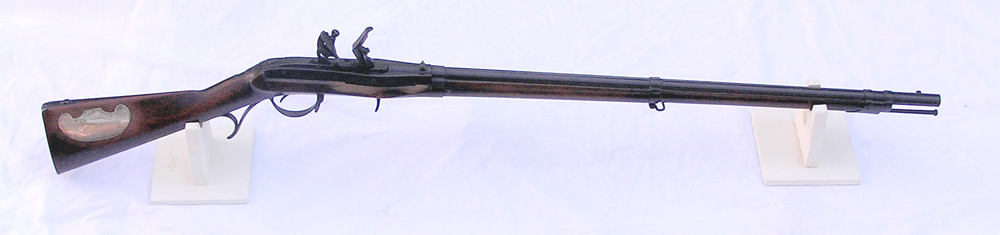
By all accounts, the Aikin volunteers went on to become successful members of their community. Martin Aikin’s rifle is on exhibit at the Clinton County Historical Association Museum.

