
Clinton County Historical Association
Heritage Corner discusses the role of Dewey's Tavern in the War of 1812
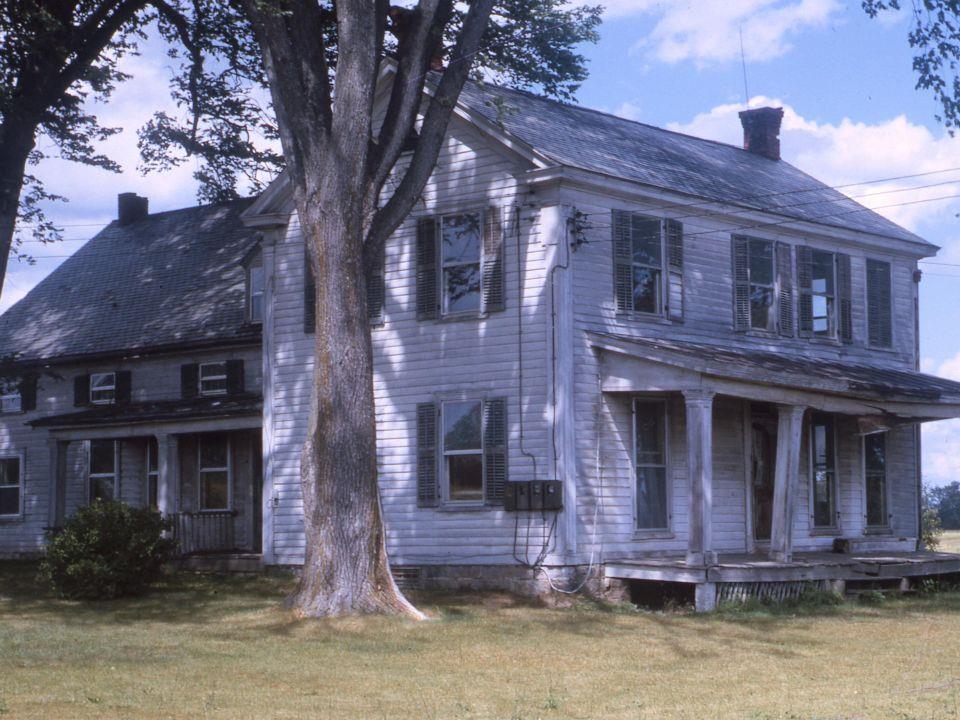
Dewey’s Tavern in the Town of Champlain witnessed many historic events during the War of 1812. Today, the house and pioneer log cabin are some of the most historic dwellings in Clinton County.
Dewey’s Tavern is situated at the corner of Route 276 and Prospect Street, halfway between the villages of Champlain and Rouses Point. The roads at ‘Dewey’s Corner’ connect to Champlain Village, Rouses Point, the Great Chazy River and Odelltown and Lacolle, Quebec.
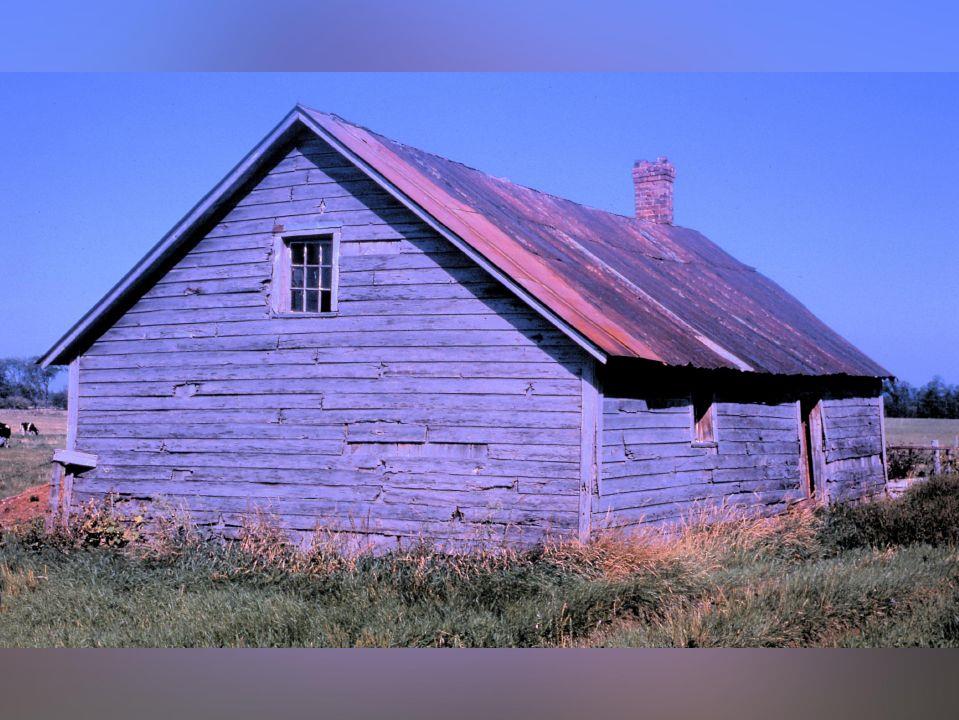
In 1798, Elias Dewey (1768-1854) and his wife Lovisa (1773-1846) arrived from Connecticut with their family of five young children. Elias built a log cabin and lived here for two or three years. Today, the 228-year-old cabin still stands and is one of the oldest dwellings in the Town of Champlain. Its hand-hewn logs and dovetailed corners are clearly seen. A simple staircase leads to a loft where the family slept. The cabin is in remarkably good condition. The Deweys had children up to 1816, including two sets of twins, and had 13 in total, although some died young.
In 1800, Elias built a frame house adjacent to the log cabin. Since the house was on the road from Albany to Montreal, he built an addition for use as an inn. In 1815, the dwelling was known as the “Elias Dewey Inn.” In the 1900s, it became known as “Dewey’s Tavern.”
The main house still retains much of the original wood. Huge logs with bark support the house in the basement. A French-style of trim borders the first-floor windows and doorways. In the addition, a more basic style of trim was used. The original kitchen contained a brick fireplace with an iron firebox and kettle. Today, there is no trace of this fireplace.
During the War of 1812, Champlain saw many incursions by Canadian militia and British troops. Numerous skirmishes took place between the tavern and the border on today’s Route 276 as well as on the hill north of upper Prospect Street. The inn was frequented by many officers of both armies.
In September of 1813, General Wade Hampton planned to invade Canada by way of Odelltown. His army of 3,000 to 4,000 troops camped in the fields around the inn and marched to Odelltown where they were repelled.
In March of 1814, General James Wilkinson planned to conquer Montreal. On March 30, his army of 4,000 soldiers marched from Dewey’s Tavern to Lacolle and engaged in battle around a fortified stone mill. Wilkinson was forced to withdraw after a two-hour battle with 13 killed and 128 wounded. Drusilla Dewey, Elias’s 12-year-old daughter, remembered that the wounded soldiers were laid on the floors of the house and in the out-buildings (the log cabin, barn and a potash building). The soldiers who died at the tavern were buried in the family cemetery.
At the end of August in 1814, British general George Prevost’s army of 10-14,000 soldiers crossed the border into Champlain and the left-wing camped around the Dewey house. It was during this time that a British soldier ran his sword through a crate while looking for a spy. Instead, he broke the corner of a mirror. The mirror was owned by the Dewey family for years and symbolized the hardships they endured during the war. The broken mirror and portraits of Elias and Lovisa Dewey are now at the Clinton County Historical Association.
On September 11, 1814, the Battle of Plattsburgh occurred and the British were defeated. They retreated back to Champlain where they remained until September 25. Legend says they left their wounded at the tavern and the dead were buried in the Dewey cemetery.
During the War of 1812, four prisoner-of-war treaties were agreed to by the American and British governments. Two of these agreements were negotiated and signed for at the Dewey house in 1814.
The Dewey family cemetery is the final resting place of some of the extended Dewey family and friends as well as American and British soldiers who died during the War of 1812. The one-acre cemetery is the second most important military burial site in the Town of Champlain, after Revolutionary War site Point au Fer.
The Dewey property was passed to Elias’s son Silas and then to Silas’s daughter in the 1880s. The land was sold and the property left the family. In 1909, great-granddaughter Elizabeth Barber moved all of the visible gravestones in the cemetery to a newly purchased lot in Glenwood Cemetery in the Village of Champlain. Unfortunately, some stones were missing and only half the bodies were suspected of being moved.
In the summer of 2013, a ground penetrating radar survey was commenced to find the location of the Dewey cemetery. The project was executed by two professors in the Anthropology Department at Plattsburgh State. Cemetery records found at Special Collections, Feinberg Library at Plattsburgh State aided in the research. First, a radar survey confirmed that half of the burial plots at Glenwood Cemetery were empty. Only people who died in the late 1800s were moved in 1909. Left behind in the field were the early 1800s burials. Afterwards, a radar survey was made in the field that contained the Dewey cemetery. A 100x60 meter grid was established and low-resolution imaging was made. A month later, several trenches were dug by students but no burials were found. It was recommended that a higher resolution radar survey be performed at this site for better accuracy and it is hoped additional fieldwork could be done someday.
In the mid-2000s, prior to the radar survey, the Town of Champlain acquired the 12-acre field where the abandoned Dewey cemetery is located. A flagpole and blue and yellow historic marker denote the suspected location of the cemetery. The memorials were donated by Woodmen Life Chapter #462 of Champlain. Two wayside interpretive panels sponsored by the Lake Champlain Basin Program describe the history of Dewey’s Tavern and Champlain’s role in the War of 1812. A second historic marker was placed in front of the tavern by the Woodmen.
-This month's Clinton County Historical Association Heritage Corner column was written by local historian David Patrick.

