
Clinton County Historical Association
Heritage Corner discusses Irish Heritage in Clinton County
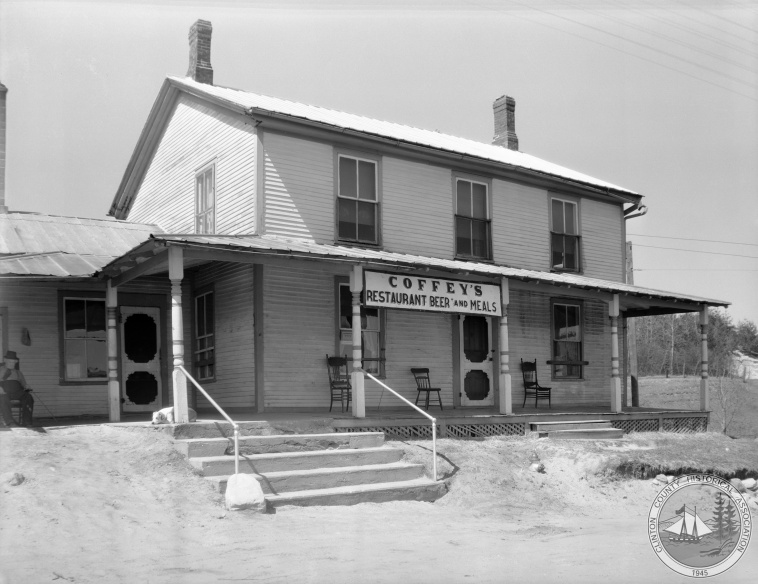
Information for this story was excerpted from an article by Jane Rupp in the 1996 issue of the Clinton County Historical Association publication The Antiquarian entitled From the Emerald Isle to Clinton County.
To quote a popular TV program – who do you think you are? If you are Clinton County born and raised you may certainly be able to claim ancestors from many countries. But it is also pretty certain that the highest percentage of you will be documenting ancestors from Ireland or Canada. How can we make such a bold statement? In the 1850 census, in the Town of Ausable, one in four were born in Canada or Ireland. In the Town of Clinton every other person would have been born in Canada or Ireland. In the whole of Clinton County in 1850, only half could claim to be born in New York, as was the case for the town of Black Brook. And were immigrants welcomed and appreciated? Apparently not the Irish. The anti-immigrant and anti-Catholic prejudice in the United States at the time even gave birth to a political party called the Know-Nothing Party. They felt immigrants such as the Irish had not been schooled in the democratic ideals and would therefore threaten the American way of life. Today we can surely confirm – not true!

As we know, the Irish have been a commanding presence in the North Country ever since William Gilliland arrived from Armagh in Northern Ireland and settled here well before the American Revolution. After Gilliland, most Irish immigrants were Scots-Irish Protestants who came, like Gilliland, to find prosperity in a new land. By 1850, however, most Irish immigrants were Roman Catholic and came to escape high rents, low wages, heavy taxes and starvation. These immigrants were prepared to accept any task and worked in our mines and woods and farms. Because many arrived in Canada, they walked across the border finding homes in our border towns of Clinton, Champlain and Mooers. Hundreds of our County’s 5,000+ Civil War soldiers were either from Ireland or Canada or had parents from there. One of our Medal of Honor recipients from Clinton County was John Moffitt whose parents were from Ireland.
Over the years certainly the lives of many Clinton County residents were enriched by the knowledge and examples of their Irish ancestors’ courage and sacrifice. Diaries have been cherished and family stories retold. The McFadden family was a part of the early wave of immigrants from Northern Ireland. George arrived in Beekmantown in 1802 and moved to Chazy in 1815 where he purchased a farm. His son Henry stayed in Beekmantown and in 1856 joined the newly formed Republican Party. Henry also served as a State legislator in 1860 and 1861. George’s other son George Jr. managed the Chazy farm and later sold it to his son Henry. This is a story replicated in every town and village of the County. At the risk of not mentioning everyone who made significant impacts, the story of the Spellmans in Beekmantown is also fascinating. They were an example of a family coming over, settling in, and welcoming the immigration of other family members. Our Irish immigrants welcomed and made room for any family who could join them. In Lawrence Spellman’s obituary it was remarked that he and his wife won ‘the love and respect of the entire community’ with many friends both here and abroad.
The complete article From The Emerald Isle to Clinton County written by Jane Rupp is available by emailing director@clintoncountyhistorical.org. Learn from her about the families McGaulley, Hanlon, Coffey, Lyon, Noonan, and Rea. Ask about the portraits of your ancestors taken between 1890 and 1925 which may be among the over 17,000 housed in CCHA. And enjoy St. Patrick’s Day this month with remembrances and appreciation of your Irish legacy or that of your neighbors.

