
Clinton County Historical Association
Heritage Corner discusses Native American artifacts in the Champlain Valley

In 18,000 BC, the Champlain Valley was covered by glaciers that depressed the land. They melted, formed a lake, and retreated. Salt water replaced the glacial water. The land rebounded, the sea drained, and a fresh water lake formed. By 9,000 BC, Paleo Indians had settled on the lake’s shores. They made stone tools and projectile points. New flora and species of game ushered in another prehistoric age. Then agriculture and pottery brought still another.
Artifacts exist from those ancient times.
Plattsburgh’s 19th century authority on local Native American and military archaeological sites, Dr. David Sherwood Kellogg, investigated twenty-one Indian village sites in the region, including one at the mouth of the Big Chazy River and one in Cumberland Bay’s sand dunes near Scomotion Creek. Since 1909, Dr. Kellogg’s collection of 15,000 artifacts has been in Massachusetts, at Amherst College’s Gilbert Museum of Indian Relics.
Dr. Kellogg was a founder of the Plattsburgh Institute, formed in the late 1890’s to research and share local history. In 1895, another founder of the group, Hiram Walworth, gave a presentation entitled “Glimpses of the Iroquois.”
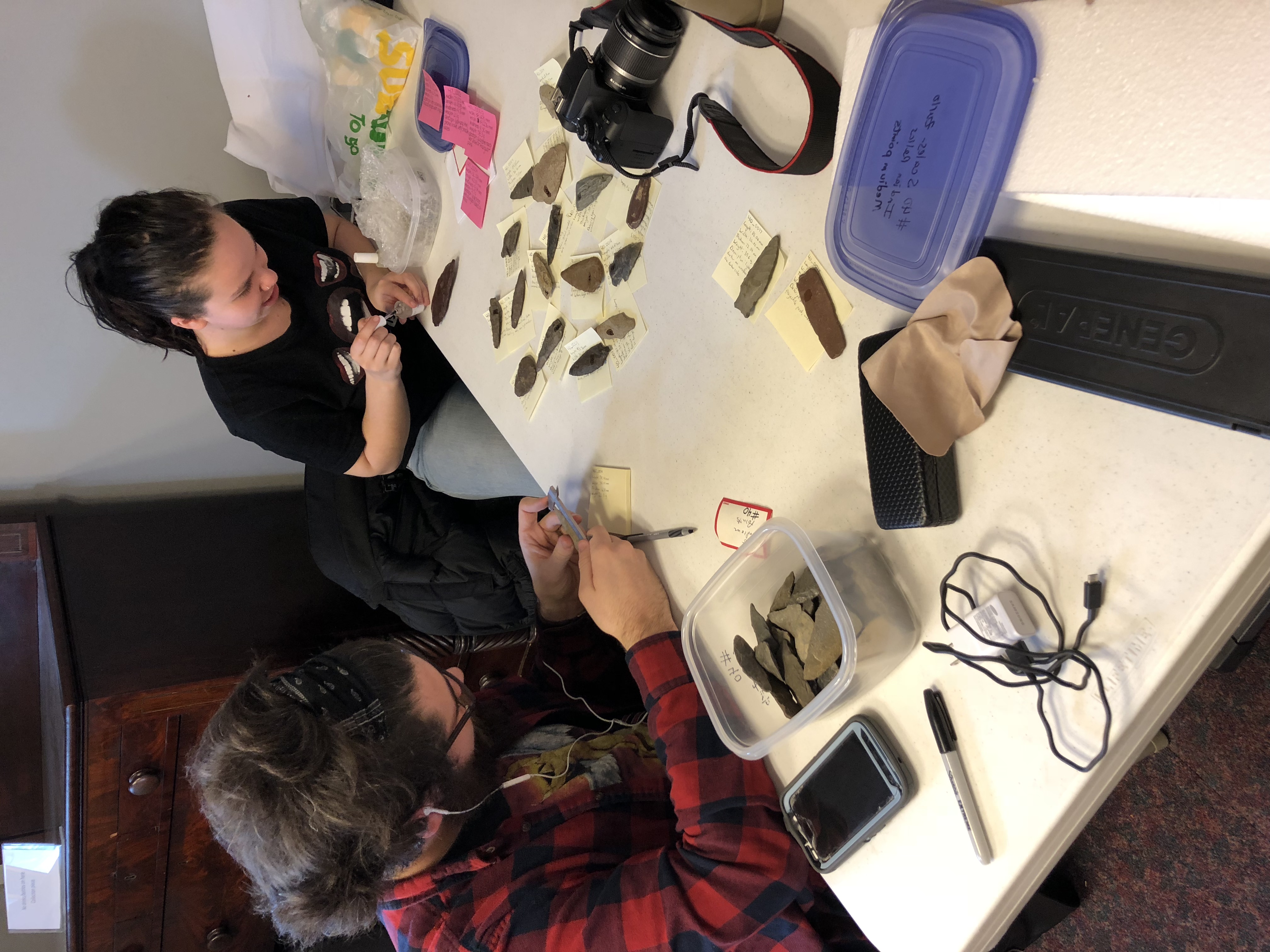
In 2012, the Clinton County Historical Association, which has a Laurentian Mohawk pot in its collection, mounted an exhibit. It included items from its collection, some dating back as far back as 12,000 years ago. The display of tools, projectile points and pottery dispelled the misconception that the Champlain Valley was an empty hunting ground. On the contrary, when Samuel de Champlain arrived in 1609, Abenaki were occupying lands to the east of Lake Champlain and Mohawks were occupying lands to the west. In 2018, the CCHA exhibit Native Women: Ancient Traditions and Modern Rights created by Saranac town historian Jan Couture honored the role Haudenosaunee women played in the woman suffrage movement.
19th century Abenaki Adirondack guide Mitchell Sabattis called Plattsburgh Sen-hah-lon-e. An ancient name, Salônek (SA-lawn-EK), meant “at the staghorn Sumac” and included all of the Saranac River, which empties into Lake Champlain at Plattsburgh. Today, the Abenaki call Plattsburgh Sô Halônek (saw-HA-lawn-EK). Tsi ietsenhtha, (Jee Yeh Jen Ta) is one of spellings for Plattsburgh’s Mohawk name. It means "where one scoops or gets water."
In 2006, Vermont recognized the Abenaki, but the following year, the federal government refused to recognize them. The Mohawk (Kanienʼkehá꞉ka/ “people of the flint”) have never been honored in Clinton County, even though they are one of the five original members of the Haudenosaunee (Iroquois) League and the traditional keepers of the Eastern Door of their great longhouse of six nations which extends across the state of New York.
The Clinton County Historical Association supports the efforts of the Tsi ietsenhtha (Jee Yeh Jen Ta)/Plattsburgh Art Project to honor the Haudenosaunee with sculptures near Peace Point at Harborside in the City of Plattsburgh. The Chapel Hill Foundation has granted the Project $4,500 in matching funds, for the creation of a clay Turtle sculpture, inspired by the Haudenosaunee Creation Story. Grant monies have also been received from the Charles R. Wood Foundation and the Clinton County Health Department. For information on how you can support this effort, contract CCHA President, Geri Favreau at gerifavreau@gmail.com or (518) 569-8984.

