
Clinton County Historical Association
Heritage Corner discusses the life of Susan B. Anthony
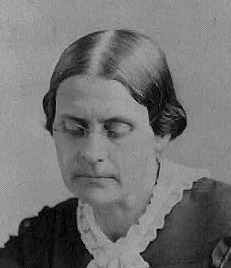
Susan Brownell Anthony spent her life devoted to obtaining women’s rights, and each March we pause to recognize her work and the work of scores of Clinton County women who fought for the right to vote. Susan B. Anthony visited Plattsburgh three times using her skills of logic and reason to persuade men to vote for woman suffrage. She also directly influenced two of Clinton County’s most outstanding suffragists.
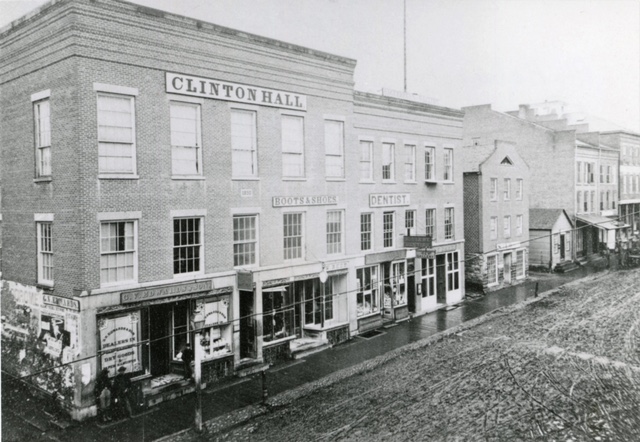
Her first visit was on a cold Monday, February 26th in 1855. She spoke at Clinton Hall on Margaret Street at the top of Bridge Street. She was reported to be an easy and agreeable speaker despite being expected to be forward and bold. Clinton County was one of 54 New York counties she spoke in that year, at her own expense, with meetings almost every night as she gathered names for petitions to support women’s rights to their earnings and their children. She felt it was essential to see voters face to face, and often she was traveling alone. At 34 years old, her biographer described her as not handsome but wholesome. The reporter covering her February 26th visit to Plattsburgh concluded with: ‘in no country is greater deference paid to women’. This deference did not include a woman’s right to her earnings or her children and, of course, did not include her right to vote.
Miss Anthony returned to Plattsburgh on another cold winter day, January 27th in 1879. The reporter documenting this event reflected that in 1855 the number of attendees was small, and that Miss Anthony’s points had been challenged by lawyers in the audience, specifically the Honorable Lemuel Stetson, a judge and politician well-known and greatly respected for his eloquence and prominence in the community.
Looking back at that 1855 visit, the reporter of 1879 also thought it might have even been risky to attend Miss Anthony’s meeting and be seen to support Anthony’s work. Hannah Straight from Plattsburgh did take the risk of attending in 1855 and was inspired by what she heard. Years later, Hannah Straight Lansing was recognized as the Mother of the Clinton County Suffrage movement and referred back to the inspiration she received from Anthony in 1855. Both she and Anthony died without ever having the right to vote.
The reflections in 1879 of the Plattsburgh Sentinel reporter on Miss Anthony’s 1855 visit would lead one to believe that the reporter had been at the 1855 event. The reporter knew the audience had been small, knew local judges had challenged Miss Anthony, and knew enough to compare many aspects of Miss Anthony’s appearance and presentation between 1855 and 1879. Coincidentally, in 1879, Hannah Straight Lansing, an author and newspaper columnist, was married to the owner of the Plattsburgh Sentinel. One could easily speculate that she wrote the report of Anthony’s 1879 visit. At this 1879 meeting, there would be another of Clinton County’s most active suffragists, Mrs. Harriet (William) Bell. She was an officer in every suffragist organization in the County. Her obituary mentions the connection she made with Susan B. Anthony in 1879 as the inspiration for her years of dedication. Through these two women, the subject of woman suffrage was securely on the table in Clinton County in 1879.
Anthony’s last visit to Plattsburgh was in April 1894 as the Clinton County Women’s Suffrage Convention met to propose deleting the word ‘male’ from Article II, Section I of the New York State Constitution, allowing women the right to vote in New York State. At 74 years of age, she was described as ‘sturdy and eloquent’ and spoke to an overflowing crowd for an hour and a half. Again, the Sentinel reporter referred to Anthony’s 1855 visit when she was looked upon as a ‘human curiosity with strange notions,’ and was further able to compare the 1879 Anthony to the 1894 Anthony as retaining the ‘full force that makes her such a power’. It would appear the Sentinel’s reporter had attended all three visits. Hannah Straight Lansing was deeply involved in this convention and helped draft a suggested amendment that local suffrage supporter C.H. Moore would take to the state convention. It was not to be accepted in 1894.
Susan B. Anthony passed away in 1906, 11 years before women won the right to vote in New York State. Hannah Straight Lansing died one year before she would have been allowed to vote. Every March, we commemorate the 72-year struggle for woman suffrage on behalf of the thousands of women who fought for and won the right to vote.
For more information on the Clinton County Suffrage Story, email director@clintoncountyhistorical.org

